Regenerative Agriculture


Look down at the dirt -- it's much more than 'dirt'
- https://www.greenpolicy360.net/w/Category:Soil
- https://www.greenpolicy360.net/w/Soil_Loss
- https://www.greenpolicy360.net/w/Microbiomes_at_Risk
2026
"Can regenerative agriculture feed the world?"
"Of course it can."
Short and beautiful trailer for the new Woody Harrelson Documentary on Regenerative Agriculture and our Food Systems - Groundswell!
Watch :- 🌱
Groundswell
Across five continents, Groundswell takes viewers on a global journey to experience the regenerative movement that is reshaping our relationship to Earth.
Narrated by Demi Moore and Woody Harrelson, this Golden Globe winning documentary film by Josh Tickell and Rebecca Tickell shows how farmers, ranchers, scientists, change-makers and Indigenous leaders are using regenerative agriculture management practices to restore the planet one acre at a time. A growing movement that’s better for human health is taking hold.
Read More about "Growing Green" @ GreenPolicy360
🌎
Wendy Johnson, Iowa Farmer
As some of the more experienced folks explained to me, regenerative agriculture is about working with the natural rhythms of our land, and less about controlling them with chemicals and fossil fuel derived fertilizers. By building healthy soil and adding a greater variety of plants and animals to our farms, we create self- supporting ecosystems that generate their own fertility and keep pest problems in check. This makes regenerative agriculture a safe, low-input way to grow food that contains more healthy nutrients.
Read Wendy's family, real life story of difficulties within the old model of agriculture production.... corporate farming, high chemical inputs pushed to boost yield averages for seasonal financing, insurance, fertilizer costs, monoculture crop demands, agribusiness practices causing changes in soil, water, needed aquifers, upstream/downstream runoff pollution, and danger of climate-related weather events, accompanied by sudden market shifts, and impactful tariffs... politics.
Into the old business model are coming alternative adaptations, agriculture practices and regenerative growth. A host of political and business forces now have opportunities to plan and develop a diversified supportive infrastructure for sustainable growth.
A new bottom line presents farmers and farming with choices to make that will change US ag on the ground.
Note the Four Reforms that Wendy is recommending:
Dig deeper into the Alternative Agriculture story:
A Food Revolution
- Smart Agriculture, Resilient, Sustainable, Today's Vision of Tomorrow
- Best Practices, Productive Ag, Rich Soil, Clean Water & Healthy Food
🌎

Common Ground
From 'Kiss the Ground' filmmakers Rebecca and Josh Tickell, Common Ground, narrated by Laura Dern, presents an urgent message about the poisonous practices within American food systems. At the forefront of this plight are the farmers and families who have lived through tragedy and illness at the hands of government policies that favor Big Ag...
Join the solution-driven movement of regenerative leaders as they make a case for soil health across North America and beyond. We can all find our ‘common ground’ to heal the soil, our health, and the planet.
Common Ground emphasizes the need to face the reality of our food systems and how profits and power are the driving force behind them. This issue affects all Americans, from the soil we stand on to the toxic air we breathe. Fighting against agro-chemical business in favor of regenerative farming is presented as a clear, bipartisan necessity for the health of our country, its people, and our collective future.––Daniela Leal
Common Ground is the recipient of the 2023 Human/Nature Award, a prize established to amplify a film that best exemplifies solution-oriented environmental storytelling.
○
Did you know that Organic food is now a $56 billion market in the United States, but it only represents 6% of all U.S. food sales?
The Regenerative-Organic food sector is growing ... Be healthy, be sustainable, go green and support regenerative ag.
It was a breakout year for organic agriculture in 2022. Consumer demand for organic food continued its steady rise, with strong prices for producers, rising land values and excellent returns for investors.
Beyond these results, three significant trends were sharply apparent last year that will continue to affect not only organic farming but the entire agriculture sector – rising consumer demand for healthy food, the fragility of the conventional farming system and investor interest in sustainable farmland practices.
Organic’s Strong Market Fundamentals
The organic market is enjoying strong momentum. Demand is growing because consumers increasingly recognize the benefits of pesticide-free healthy organic food. They also see that conventional chemical-based farming and food production are increasingly industrialized and commoditized, harming the environment and producing unhealthy, pesticide-laden food.
Today, organic food is a $56 billion market and represents 6% of all U.S. food sales. Demand is growing at 13% annually and is constrained by a lack of supply, since organic cropland is only 1.2% of all farmable acreage in the U.S. and is growing by just 7% yearly. The result is a 50-200 percent price premium for organic produce.

- http://www.ccof.org/ -- California organic foods
- http://www.ifoam.bio/ -- International
○ ○ ○ ○ ○ ○ ○ ○ ○ ○ ○ ○ ○ ○ ○
Organic Farming Can Feed the World
- http://www.technologywater.com/post/69995394390/un-report-says-small-scale-organic-farming-only UM Report
Even as the United States government continues to push for the use of more chemically-intensive and corporate-dominated farming methods such as GMOs and monoculture-based crops, the United Nations is once against sounding the alarm about the urgent need to return to (and develop) a more sustainable, natural and organic system.
That was the key point of a new publication from the UN Commission on Trade and Development (UNCTAD) titled “Trade and Environment Review 2013: Wake Up Before It’s Too Late,” which included contributions from more than 60 experts around the world.
○
2022
Toward a Living, Thriving Earth
Time to Move from Agrochemical, Petrochemical Regimes to New Alternative Agriculture
Sustainable Methods of Ag and 'Smart Farming', Small/Medium and Large Agriculture Are Calling to Us
From the Living Earth Foundation: Widespread use of toxic agrochemicals has been steadily destroying the microbial cultures that keep airborne carbons in check. It is estimated that if JUST 20% of farmlands switched to regenerative agriculture, it would be enough for the cleansing microbes to sequester airborne carbons back into the soil to reach sustainable levels! Rather than costing $Trillionss in carbon taxes, these new regenerative systems will create new jobs and boost economies by improving the quality and affordability of our foods, while simultaneously helping to restore climatic balance.
Addressing the root cause of global warming thus resides in our ability to live and do business in alliance with nature...
🌎

* https://www.greenpolicy360.net/w/File:Living_Earth.png
🌎
Regenerative Agriculture
- Re-Thinking, Re-Designing, Re-Working Agriculture
- For a Living, Resilient, Sustainable Planet
Planet Citizens, Planet Scientists

🌎

The Soil Is a Key to Prosperity and Food, and Health... The Ground Is Alive with Life, a Miracle of Fertility. Now It's Up to Us to Keep the Earth Alive and Thriving
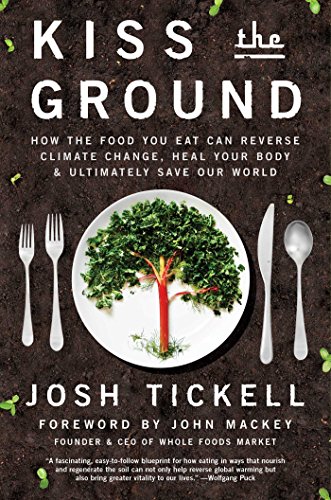
Watch the 'Kiss the Ground' Movie: It's Not the Marvel Universe (but it's Marvelous)
Kiss the Ground.com
- Restoring the Soil
- Accelerating regenerative agriculture
- ·················································································
Regenerative Ag Meets Regenerative Watersheds and River Basins
Local, Regional and Global 'Green Best Practices'
Regeneration Globally
1000 Landscapes for 1 Billion People
Regenerative Agriculture in Europe, by Richard Perkins
·································································
Bioneers - #RegenerativeAgriculture is a key solution to mitigating #ClimateChange
Regenerative Agriculture: Nourishing the Soil, Healing the Planet
Bioneers Food and Farming: Restoring Ecosystems Video
Regenerative agricultural practices draw down atmospheric carbon and sequester it in the soil where it boosts fertility and nurtures biodiversity, making this approach to agriculture a key solution to mitigating climate change.
Featuring: Donika Markegard, Markegard Family Grass Fed; Elizabeth and Paul Kaiser, Singing Frog Farms; Tim LaSalle, Center for Regenerative Agriculture & Resilient Systems - CSU, Chico.
Explore the Bioneers Regenerative Agriculture Media Series at http://bioneers.org/regen-ag
··································································································································
'Regenerative Agriculture and the Soil Carbon Solution': Vision Ag for Climate Action
Via Rodale / Common Dreams
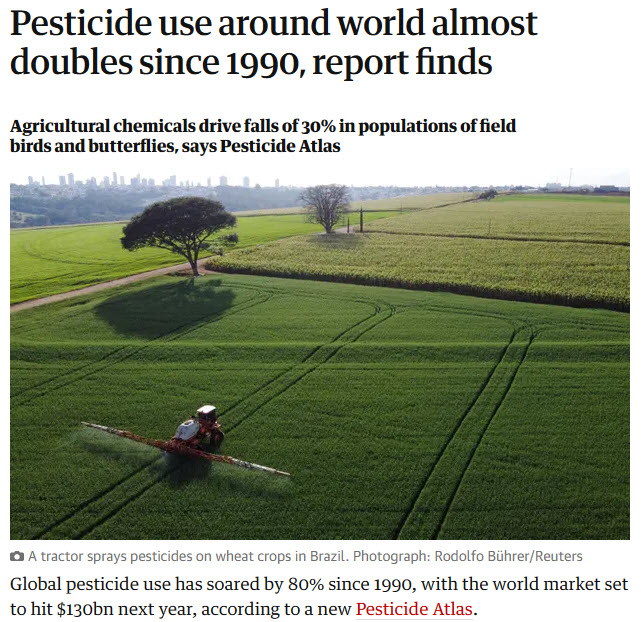
In contrast to industrial practices dependent upon monocultures, extensive tillage, pesticides, and synthetic fertilizers, a regenerative approach uses, at minimum, seven practices which aim to boost biodiversity both above and underground and make possible carbon sequestration in soil.
- Diversifying crop rotations
- Planting cover crops, green manures, and perennials
- Retaining crop residues
- Using natural sources of fertilizer, such as compost
- Employing highly managed grazing and/or integrating crops and livestock
- Reducing tillage frequency and depth
- Eliminating synthetic chemicals
·············································································································································

- Regeneration International and Kiss the Ground team up to create a video series they call “Trails of Regeneration”
Farm du Bec Hellouin in Normandy, France
By what yardstick do farmers Charles and Perrine Hervé-Gruyer measure the success of their farm business? For starters: yield.
Using regenerative practices, the husband-and-wife team says they can grow as much food on one-tenth of a hectare (one hectare equals about 2.3 acres) of land as neighboring farms grow on only one hectare of land! How? The organic farm, based on the principles of permaculture, uses mound cultivation, agroforestry, associated crops, animal traction, fragmented ramal wood, effective microorganisms, terra preta and more.
··············································································
The importance of a regenerative food system
To grow food, we need soil. Even with modern technology enabling systems like hydroponics to grow crops, humanity needs soil to produce enough food for the global population. Unfortunately, many modern farming techniques have destroyed soil or depleted it.


Soil Health: Regenerative Ag Video Education Series
Soil Health Institute (SHI): “Soil health is the powerhouse of sustainability and the foundation of regenerative agriculture. Healthy soil improves resiliency to flood and drought, filters our water, and is an important key to improving carbon storage. We’re eager to share information with everyone who has an interest in soil health.”
The video series includes: Shannon Cappellazzi of SHI on “Soil Health Diagnosed as You’ve Never Heard Before”;
Alex Fiock of SHP on “Focusing on Soil Health from the Ground Up”;
Barry Fisher of the NRCS Soil Health Division and Betsy Bower of Ceres Solutions Cooperative present “Partnering to Enhance Soil Health”; and
Jane Hardisty, former NRCS Indiana State Conservationist on “You Are Changing the World!”.
“People say that clean water is the key to life on the planet, but the very same thing can be said about healthy soil – it is literally the foundation to productive agriculture, balanced wildlife habitats, and an overall healthy environment for all. These PED Talks are not only useful for our nation’s agricultural producers, but for our educators, policy makers and the general public. We all benefit from good soil health!”
·········································································································································
Patagonia says Regenerative Organic Agriculture is a vital solution to deal with global warming
• https://www.businessinsider.com/patagonia-global-warming-solutions-2019-4
·······························································
Regenerative Green Best Practices
• https://www.climaterealityproject.org/blog/what-regenerative-agriculture
Degenerative v. Regenerative
Read the complete Bioneers interview with John Chester
• https://bioneers.org/farmingfilming-and-biodiversityan-interview-with-john-chester/
• https://www.biggestlittlefarmmovie.com/
ARTY MANGAN: How can the system be changed from rewarding those who use degenerative practices – spraying chemicals, creating pollution, destroying biodiversity, etc. – to economically encourage regenerative agriculture?
JOHN CHESTER: We have underestimated the force of nature, which is conscious and more powerful than the political framework. It’s far more powerful than the economic framework. When that’s aligned and it’s supporting farms that grow things in a regenerative way, expect massive change. I think that we’re seeing incredible support from consumers who know about soil. There is a growing tide of awareness and education and those consumers are the people that will make the difference, beyond the politics, beyond the chemical companies that we’ve become dependent upon because of our complacency and detachment over a prioritization of innovating alongside of nature, which has been lost for 75 to 260 years.
We’re in a much better time now because there is a consumer base that wants this, that understands the value of nutrient density. There’s another consumer base that understands the value of restorative eco-agricultural practices. Ten years ago, people weren’t even saying the word regenerative...
🌎
Regeneration: The Book
by Paul Hawken
Regeneration: Ending the Climate Crisis in One Generation | Published: September 2021
Regeneration: The Project
🌎
Designing for a Regenerative Future
- Regenerative Agriculture
- Via Bioneers | Bioneers
What if how we farm could not only slow down climate change, but actually help reverse it?
Modern, “industrial” agriculture has radically boosted food production to feed billions, but its monocropping, fertilizer and pesticide use, and total dependence on fossil fuel, have come at an enormous cost to people and the planet, destroying whole ecosystems and radically degrading soil vitality. The way our food is produced, stored, transported, and processed is totally unsustainable, and in our current climate crisis, its carbon footprint simply can’t be ignored.
Agricultural production currently accounts for 11% of global greenhouse gas releases, and in 24 countries it’s the top source of emissions. And, ironically, food production is one of the economic activities most heavily threatened by climate change. The very problem it is helping create could be its downfall.
🌎
Soil is the Word
Protect the Soil (or Else)
Microbiomes at Risk | Soil Loss | Alternative Agriculture
🌎
Ecowatch: Think Regenerative
• http://ecowatch.com/2015/01/06/regenerative-organic-agriculture/
• http://ecowatch.com/2015/01/13/regenerative-organic-agriculture-2/
We’ve severely disrupted the balance in the “carbon triad” by clearing rainforests, degrading farmland, denuding pasturelands, and burning coal and oil. The carbon triad? Yes; think of the three main carbon sinks: the atmosphere, the oceans and the humus-sphere. While I’m sure you’re familiar with the first two, you might not know about the latter carbon sink. Humus is the organic component of soil. (Gardeners create it as compost.) The humus-sphere is made up of the stable, long-lasting remnants of decaying organic material, essential to the Earth’s soil fertility and our ability to grow nutrient-rich crops.
·········································

Carbon Storage, Soil-Based / 2017
“It’s immensely beneficial for agriculture to increase carbon in the soil.”
That’s Kate Scow of the University of California-Davis.
Adding organic matter such as decaying plant and animal material increases soil carbon. Scow says that improves crop yields, reduces erosion, improves water efficiency, and supports beneficial microorganisms.
It’s also a great way to slow climate change, because it helps plants store more carbon in the ground. But many modern farming practices can deplete soil carbon.
Scow: “A lot of people are making observations about it, like how it was when their grandfather farmed and how it is now.”
To improve soil health and reduce global warming pollution, California is investing seven and a half million dollars in the Healthy Soils program. It will promote farming methods that retain soil carbon, for example reducing tilling, growing cover crops and applying compost...
Practice Regenerative Agriculture at Home
·············································································
• https://www.greenpolicy360.net/w/Permaculture_Green_Practices


- Agriculture
- Agricultural Economics
- Alternative Agriculture
- Aquifers
- Biodiversity
- Bioneers
- Carbon Sequestration
- City-County Governments
- Climate Change
- Climate Policy
- Climate Smart Agriculture
- Earth Science
- Eco-ethics
- Eco-nomics
- Ecology Studies
- Environmental Protection
- Farm-Related Policies
- Food
- Food-Related Policies
- Green Best Practices
- Green Business
- GreenPolicy360
- Health
- Land Use
- Natural Capital
- Organic Food
- Permaculture
- Resilience
- Soil
- Sustainability
- Sustainability Policies
- Toxics and Pollution
- Water
- Water Saving
- Whole Earth