Category:Origins of Life


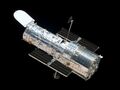
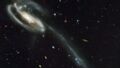
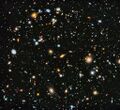
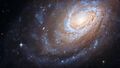
Hubble peers out to the beginnings of the universe...
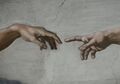
Genesis... -- https://en.wikipedia.org/wiki/God -- https://en.wikipedia.org/wiki/Creation_myth
🌎
- Questions are being asked ... science and spirit, facts and faith ...
- Questioning and question marks, knowledge and reflection ...
What Is the Essence of Being Alive?
Let's look.
GreenPolicy360: Start at the Santa Fe Institute. Up there in the Sangre de Cristo mountains above the old adobe city of Santa Fe is a world-famed institute housing a jangle of world-wise scientific experts. One of the questions being seriously asked and pursued centers around 'What is life?'.
So, we identify a life-science physicist, and ask them -- "What is life?"
Then, we step away, and listen... almost immediately we recognize a type of 'happiness' as the scientist's answer involves the raison d'etre of the scientist's professional life as a thinker...
The tossed hair scientist first explains what life is not, as an introduction to what life is, and life is not 'a thing' he says. He mentions an ancient Greek philosopher, then another, espouses their thoughts about a living and a dead fish, and concludes that life is not about 'things'.
We follow along.
Life is 'a process', he says...
There. He said it, and we agree. Life is not an 'it'... a fish in this case. Life is about a process, change, we're talking relationships ... an ellipsis and ellipses ... Lifecycles ...
It's All Related ... and it's moving ... we're thinking about perspective now.
We listen more attentively now to the scientist.
Thanks Eric Smith of the Santa Fe Institute --
Eric... has sought to understand the origin of life as a planetary process, particularly the interplay of chance and necessity that generated the systems of metabolism, the rise of molecular hierarchy and folded macromolecules, and the choreography that coalesces objects and events into individuals and their reproductive lifecycles.

Now onward .... thinking of living systems, ecosystems, biospheres, evolution ...
Our thoughts and thinking go to spirit and science... and deep origins of life and beyond ...
Up to 'Heaven' and continuing onward to 'the Stars Above'
* https://www.greenpolicy360.net/w/Category:Origins_of_Life

⬆️
NASA Goes Looking for Life in the Universe
- Nancy Grace Roman Is the Name of the (biggest- and best-ever) Telescope
August 30, 2026
News from the Florida East Coast
(CNN) A massive observatory that scientists have called a “discovery machine” has launched toward the cosmos, beginning a journey that could mark a significant shift in our understanding of the universe.
Designed to seek out otherwise invisible and faint space objects, NASA’s Nancy Grace Roman Space Telescope lifted off aboard a SpaceX Falcon Heavy rocket at 7:26 a.m. ET Sunday from Kennedy Space Center in Florida. The observatory reached orbit about 10 minutes later.
(NYT) At a news conference on Saturday morning, Nicola Fox, the associate administrator of NASA’s science mission directorate, explained that Roman’s vast gaze would contribute to solving some of the grandest mysteries about our universe, including how it works, what it is made of and if we are alone out there.
“To put it in perspective, it will be as if Hubble and James Webb kind of peered through a keyhole at the universe,” Dr. Fox said, referring to two other telescopes NASA has launched into space. “Well, Nancy Grace Roman will kick the door down.”
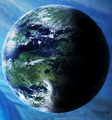
(GRN360) Get ready for 'Exo's in Space' ... Exoplanets ...... with discernible, measurable signs of extraterrestrial life✨ ❇️ ✨
'Up' there ⬆️
As seen from 'down' here on our terrestrial Home Planet
Go we go, we're looking 'around'. We're going Exploring ❇️
NASA's Exoplanet Archive
🌎

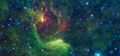
Panspermia (from Ancient Greek πᾶν (pan), meaning 'all', and σπέρμα (sperma), meaning 'seed') is the hypothesis that life exists throughout the Universe, distributed by space dust, meteoroids, asteroids, comets, planetoids, and also by spacecraft carrying unintended contamination by microorganisms. Distribution may have occurred spanning galaxies, and so may not be restricted to the limited scale of solar systems.
Panspermia hypotheses propose (for example) that microscopic life-forms that can survive the effects of space (such as extremophiles) can become trapped in debris ejected into space after collisions between planets and small Solar System bodies that harbor life. Some organisms may travel dormant for an extended amount of time before colliding randomly with other planets or intermingling with protoplanetary disks. Under certain ideal impact circumstances (into a body of water, for example), and ideal conditions on a new planet's surfaces, it is possible that the surviving organisms could become active and begin to colonize their new environment. At least one report finds that endospores from a type of Bacillus bacteria found in Morocco can survive being heated to 420 °C (788 °F), making the argument for panspermia even stronger. Panspermia studies concentrate not on how life began, but on methods that may distribute it in the Universe...
'Life finds a way', the 'tiny little ones', microrganisms, spores/fungi... traveling thru space and 'seeding'
······································
- Season One, Episode 4 -- Genesis


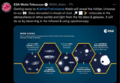
ESA
- "We are made of star stuff"
- I'm stepping through the door
- And I'm floating in the most peculiar way
- And the stars look very different today
- And I'm floating in the most peculiar way
- I'm stepping through the door
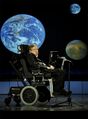
- On the passing of Stardust David ...
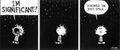
- “We are all stardust”
- ―- Carl Sagan

- Yes, we are ...

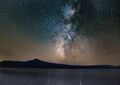
Northern NM Ghost Ranch, Pedernal & Milky Way, Photo by David Lancaster

The Home Galaxy, Photo by Andrew McCarthy
NASA / Our Milky Way
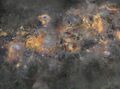
Our home galaxy is called the Milky Way. It’s a spiral galaxy with a disk of stars spanning more than 100,000 light-years. Earth is located along one of the galaxy’s spiral arms, about halfway from the center. Our solar system takes about 240 million years to orbit the Milky Way just once.
🌎
Subcategories
This category has the following 4 subcategories, out of 4 total.
Pages in category "Origins of Life"
The following 11 pages are in this category, out of 11 total.
Media in category "Origins of Life"
The following 70 files are in this category, out of 70 total.
 1.2-million-galaxies-map-slice.jpg 800 × 600; 326 KB
 2001 pic3.jpeg 800 × 450; 65 KB
 29 Days on the Edge w James Webb.png 527 × 461; 215 KB
 43245326 2662602463753498 4405976459546460160 o.jpg 1,598 × 1,200; 163 KB
 92493695 2846246678763162 7097792584625422336 o.jpg 1,041 × 590; 70 KB
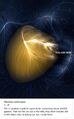 A Big Picture on an Election Day 11-3-2020.jpg 442 × 712; 86 KB
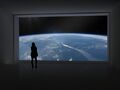 Above Earth .jpg 2,000 × 1,500; 278 KB
 All Alone In the Night.png 831 × 426; 275 KB
 AncientWisdom.jpg 420 × 125; 7 KB
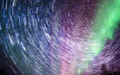 Aurora startime.png 552 × 343; 458 KB
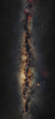 Backbone of Night - The Milky Way by Andrew McCarthy 2023.png 796 × 1,722; 2.3 MB
 Blue Danube Scene from 2001, the Movie.png 800 × 390; 270 KB
 Cellular Landscape.jpg 300 × 336; 44 KB
 Charles Ross, Star Axis in New Mexico.png 800 × 1,029; 925 KB
 Creation-of.jpg 439 × 306; 26 KB
 Dark sky by Jack Fusco.jpg 800 × 540; 119 KB
 Edwin Hubble announces existence of other galaxies - 1924.jpg 428 × 640; 76 KB
 Ergo, stars are, we are, older than we thought.png 689 × 663; 448 KB
 Hubble - Wikipedia.jpeg 800 × 600; 82 KB
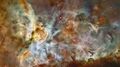 Hubble carina star births.jpg 1,050 × 590; 143 KB
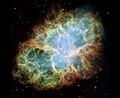 Hubble crab nebula.jpg 483 × 395; 160 KB
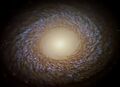 Hubble NGC 2775.jpg 800 × 581; 69 KB
 Hubble NGC-1376-22811500-2560-1705.jpg 2,560 × 1,705; 105 KB
 Hubble spots a celestial bauble.jpg 1,280 × 995; 266 KB
 Hubble stars.jpg 964 × 405; 258 KB
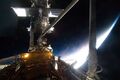 Hubble STS-125 May 17 EVA.jpg 4,288 × 2,843; 1.44 MB
 Hubble tadpole galaxy.jpg 1,050 × 591; 82 KB
 Hubble Ultra Deep Field 2014-20140603 NASA-HS201427a-.jpg 1,024 × 935; 316 KB
 Hubble ultra deep field high rez 1024px-.jpg 1,024 × 1,024; 193 KB
 I am a significant... speck of stardust.jpg 605 × 250; 33 KB
 James Webb - Unfold the Universe - ESA January 2022.png 640 × 444; 304 KB
 James Webb in alignment - 1.jpg 480 × 572; 84 KB
 James Webb in alignment - 2.jpg 480 × 579; 95 KB
 James Webb Telescope Unveils First Image - 1.png 800 × 761; 282 KB
 James Webb Telescope Unveils First Image - 2.png 800 × 824; 418 KB
 Life Goes On.jpg 400 × 90; 11 KB
 Living Earth, a Generational Challenge.png 800 × 776; 230 KB
 Making of Fantastic Fungi.jpg 640 × 360; 62 KB
 Milky Way comparison - 1.png 523 × 306; 337 KB
 Milky Way comparison - 2.png 523 × 299; 326 KB
 Milky Way Map.png 768 × 847; 1.04 MB
 NASA Webb Telescope - Top of Mind.jpg 4,096 × 2,726; 1.98 MB
 NASA Webb Telescope -- Top of Mind.jpg 800 × 532; 86 KB
 Pale-blue-dot.jpg 1,680 × 1,050; 248 KB
 Pandora to be found Exoplanets in Space.png 588 × 630; 488 KB
 Panspermia.jpg 600 × 280; 64 KB
 Pedernal and Milky Way - Photo by David Lancaster.jpg 800 × 569; 333 KB
 Phyto the Green Machine.png 640 × 465; 431 KB
 Plankton story - New Yorker - Oct 2021.jpg 619 × 737; 125 KB
 Prochlorococcus featured at GreenPolicy360.png 497 × 642; 42 KB
 Rho Ophiuchi.png 768 × 891; 1.06 MB
 Star Galaxies Revealed - Origins of Life Mission ESA-NASA.jpg 782 × 960; 139 KB
 Stardust Origins.jpg 800 × 453; 48 KB
 Starstuff we are.jpg 800 × 324; 66 KB
 Stephen Hawking-Genius-2016.jpg 250 × 339; 27 KB
 The Milky Way-GrandeMosaic120DegreesLONG.jpg 3,512 × 650; 2.1 MB
 The Milky Way-Mosaic120DegreesL-800x148.jpg 800 × 148; 109 KB
 The Milky Way.jpg 680 × 507; 88 KB
 Tiny Plankton - via The Guardian.jpg 591 × 181; 59 KB
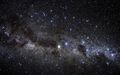 We are made of star stuff -- carl sagan.jpg 1,200 × 750; 722 KB
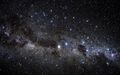 We are made of star stuff 2-- carl sagan.jpg 800 × 500; 327 KB
 We are stardust.jpg 600 × 600; 53 KB
- Error creating thumbnail: File missingWe are Stardust.jpg 640 × 538; 39 KB
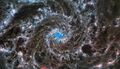 Webb - Phantom Galaxy M74.jpg 680 × 389; 76 KB
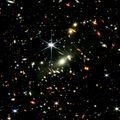 Webb 1.jpeg 800 × 800; 74 KB
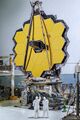 Webb Telescope construction completed-Nov2016.jpg 534 × 800; 100 KB
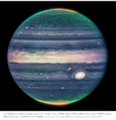 Webb Telescope observes Jupiter - Aug 2022.png 768 × 795; 779 KB
 Webb v Hubble.jpg 768 × 839; 150 KB
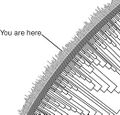 You are here on the cladogenetic tree.jpg 1,048 × 1,002; 230 KB


